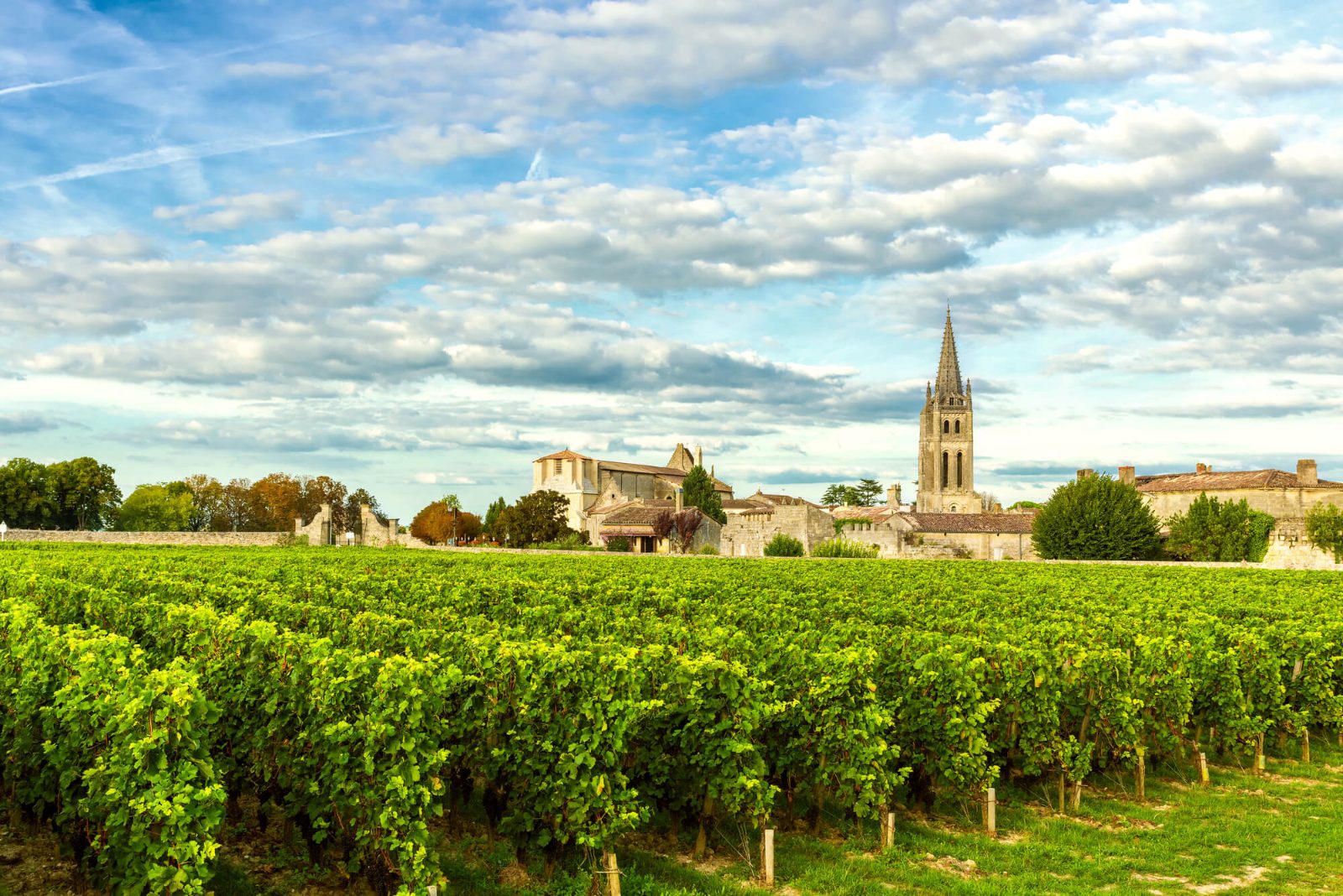
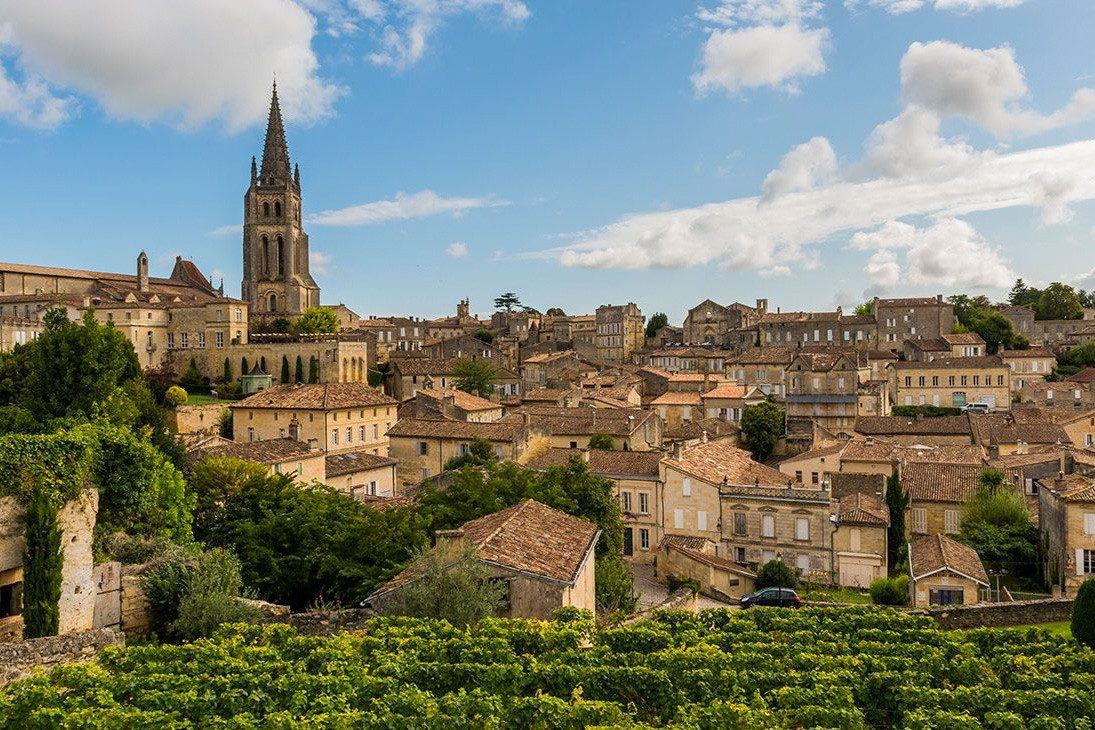
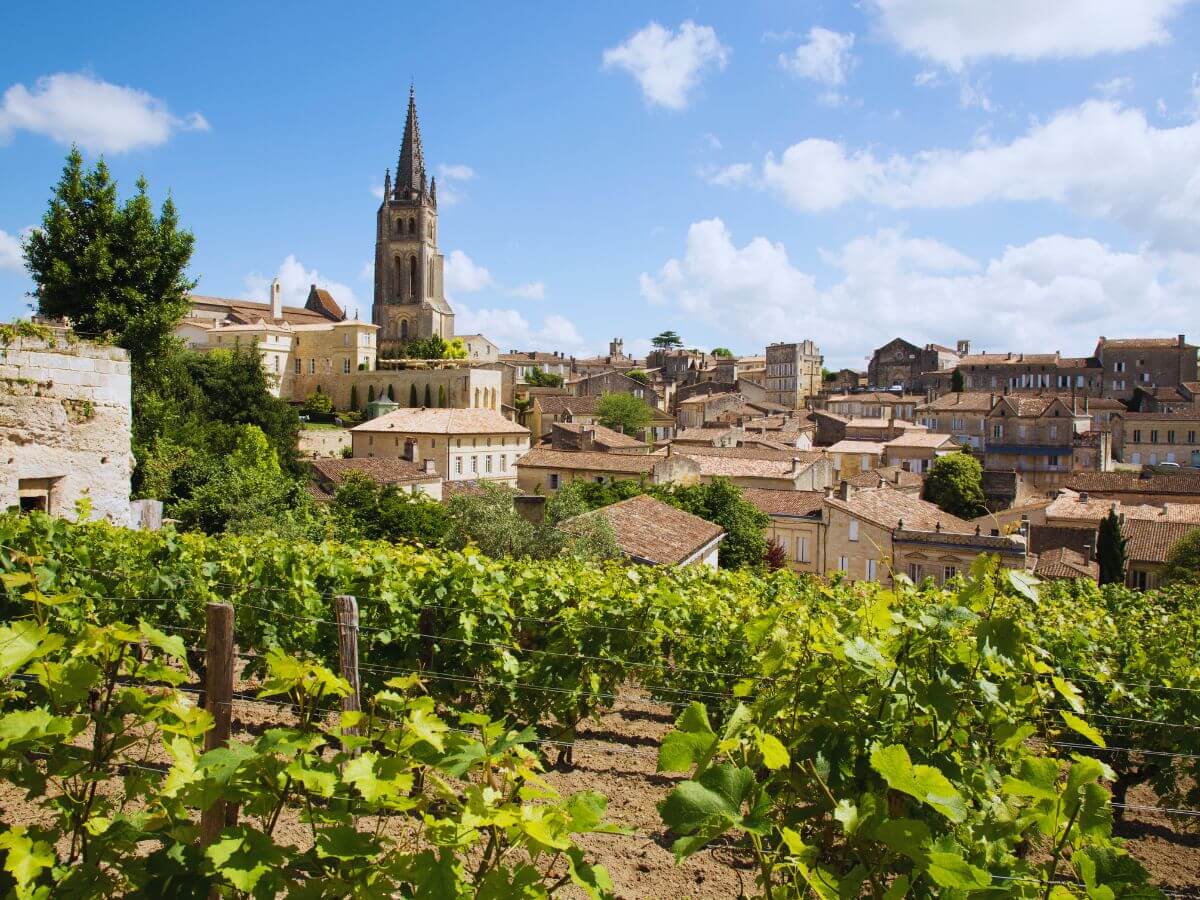
4 hr 30 min
Saint-Emilion Wine Discovery with Château Visit
- Entry ticket
- Mobile voucher
- Valid same day
- Free cancellation
Bordeaux Wine Tour St Emilion — Château Visits & Grand Cru Tastings
Medieval cobblestones meet centuries of winemaking, one tasting at a time
Compare fares, pick the fit — all bookings are mobile-voucher and eligible for free cancellation where shown.
4 hr 30 min
7 hr
4 hr 30 min
| Experience | Duration | Rating | Transfers | Guide | Small group | Free cancel. | Price | |
|---|---|---|---|---|---|---|---|---|
|
Standard Entry
Most popular
Saint-Emilion Wine Discovery with Château Visit
|
4 hr 30 min | ★ 4.8 | ✓ | ✓ | ✓ | ✓ | $99 | Book → |
|
Guided Experience
St-Emilion Wine Tour with Château Tastings & Picnic Lunch
|
7 hr | ★ 4.8 | ✓ | ✓ | ✓ | ✓ | $180 | Book → |
|
Standard Entry
Saint-Émilion Wine Tour with Château Visit
|
4 hr 30 min | ★ 4.7 | — | — | ✓ | ✓ | $105 | Book → |
Worth it for wine learners and transport-free visitors
A bordeaux wine tour st emilion solves two practical problems: navigating vineyard-scattered appellations without a car and accessing Grand Cru Classé estates that rarely open doors to walk-ins. Half-day tours with château visits and tastings start around €70–90, while full-day options covering both Saint-Émilion and Médoc appellations run €140–180 with lunch included. You're paying for expert-guided cellar tours, reserved tasting slots at classified properties, and round-trip transport from Bordeaux city center—logistics that cost similar money to arrange independently once you factor in car rental, parking fees, and advance château reservations. The value equation shifts if you already have transport and wine knowledge: independent travelers can visit the underground monuments for 11 EUR, walk the medieval village freely, and book direct tastings at cooperative cellars for €15–25. Organized bordeaux wine tour st emilion tours deliver strongest ROI for first-time visitors without regional expertise, groups splitting costs, and anyone prioritizing convenience over spontaneity in Right Bank terroir exploration.
Bottom line: Organized Saint-Émilion wine tours justify their cost when convenience and curated access outweigh the flexibility of independent vineyard hopping.
Choosing between these regions depends on whether you prefer the medieval architecture of the Right Bank or the prestigious chateaux estates of the Left Bank; many travelers who secure bordeaux wine tour st emilion tickets find the village setting more immersive than the expansive Médoc route.
|
Top pick Saint-Émilion Monuments |
Médoc Estate Tours | |
|---|---|---|
| Primary focus | Underground monolithic heritage | Left Bank classified growth chateaux |
| Travel from Bordeaux | 45 minutes by train | 45-60 minutes by bus/car |
| Vibe | Medieval village exploration | Grand estate grandeur |
| Key attraction | Underground monuments | Wine cellar tastings |
| Admission fee | 11 EUR per person | Free to 45 EUR per estate |
| Best time to visit | 10:30–12:30 (wed–sun) | Late morning or afternoon |
| Suitability | History and wine enthusiasts | Serious oenophiles and architecture fans |
| See tickets & prices |
Verdict: If you want a bordeaux wine tour st emilion tour that blends historical depth with viticulture, Saint-Émilion is the choice, while those seeking legendary Cabernet Sauvignon blends should prioritize bordeaux wine tour st emilion tours in the Médoc.
Hand-picked experiences loved by thousands of travelers
9 hours
Free Cancellation
Discover Bordeaux's finest estates across both banks with expert-led tastings, a château picnic, and UNESCO village exploration
1 hour
Free Cancellation
Compare heritage and innovation across two contrasting estates, then savor three regional wines
5 to 8.5 hours
Free Cancellation
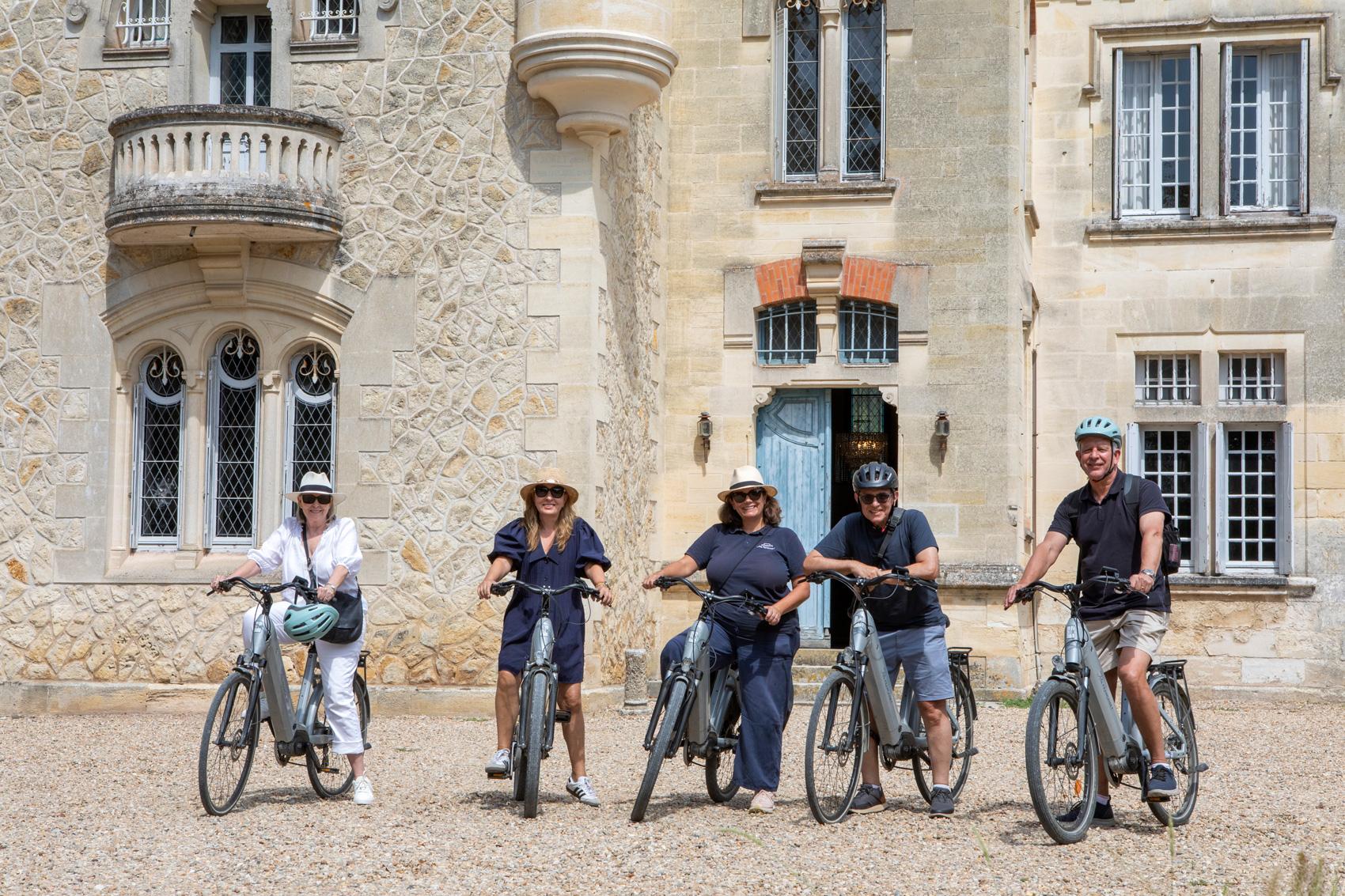
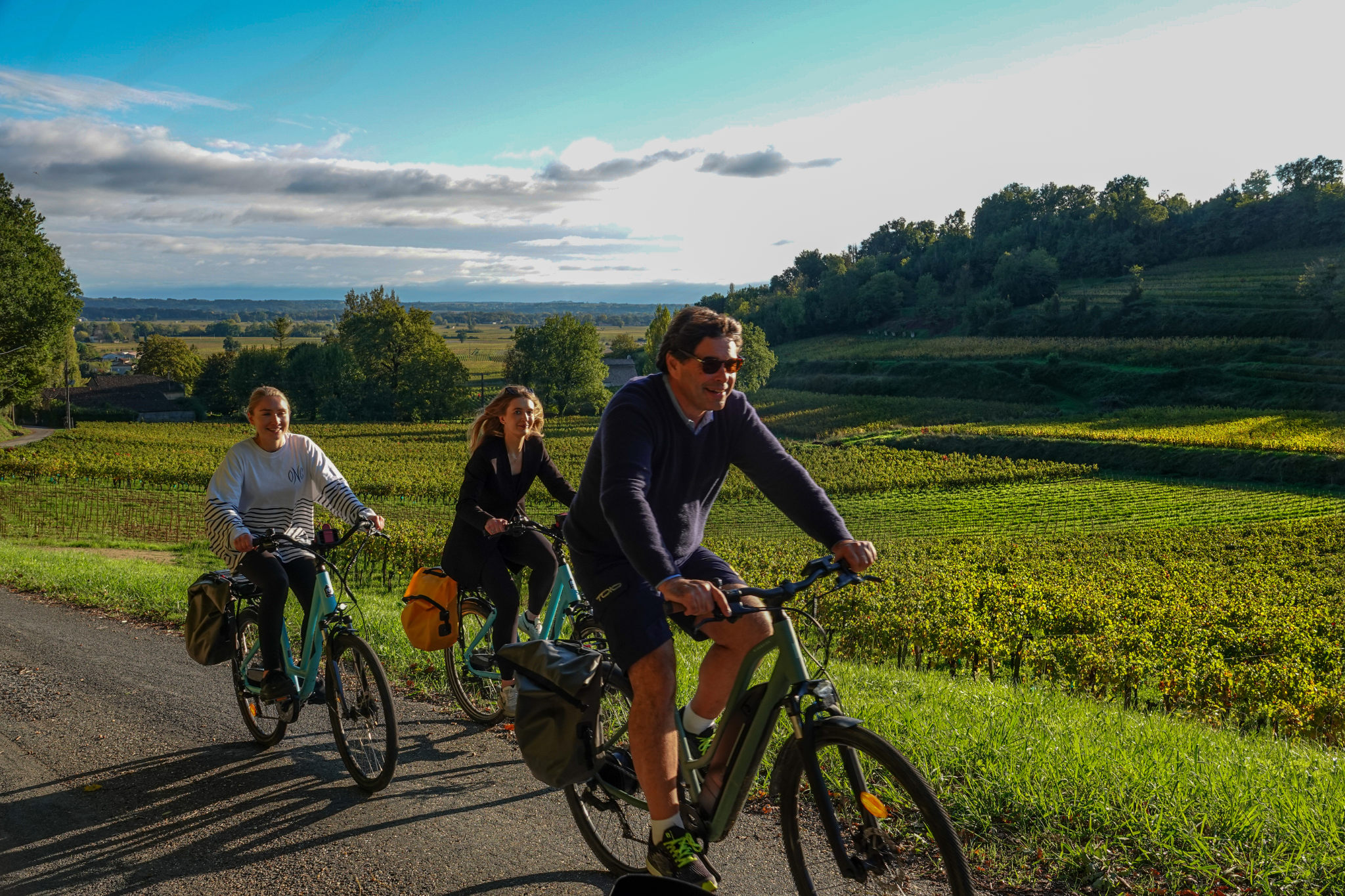
Explore renowned vineyards by electric bike, taste exceptional wines at classified estates, and discover a UNESCO village
8 hours
Free Cancellation
Explore renowned Right Bank vineyards with tastings at three prestigious estates and a guided stroll through medieval St Emilion
5 hours
Free Cancellation
Explore two prestigious wine regions, sample seven exceptional reds, and wander a medieval village
7 hours
Free Cancellation
Cycle through renowned vineyards, visit authentic châteaux, and savor 13+ wine samples on this guided adventure
8.5 hours
Free Cancellation
Explore Bordeaux's prestigious wine regions with tastings at three estates and lunch in Saint-Émilion
Meet at the tourism office for check-in procedures.
Guided visit of the monolithic church and catacombs.
Self-guided exploration of medieval limestone lanes.
Scheduled cellar visit or professional tasting session.
A massive 12th-century structure carved entirely from a single limestone cliff.
These underground tunnels contain ancient burial sites and historical carvings.
The highest point in the village, providing a view of the Saint-Émilion landscape.
A serene 14th-century monastery ruin set within a beautiful garden courtyard.
Historical tunnels that extend for miles beneath the village and vineyard estates.
You arrive mid-morning when vineyard light slants across the côtes, illuminating rows of Merlot still weeks from harvest. The guide meets you at the château gate — usually a family estate rather than a corporate holding — and leads you past the cuvier where stainless steel vats stand ready for September's crush.
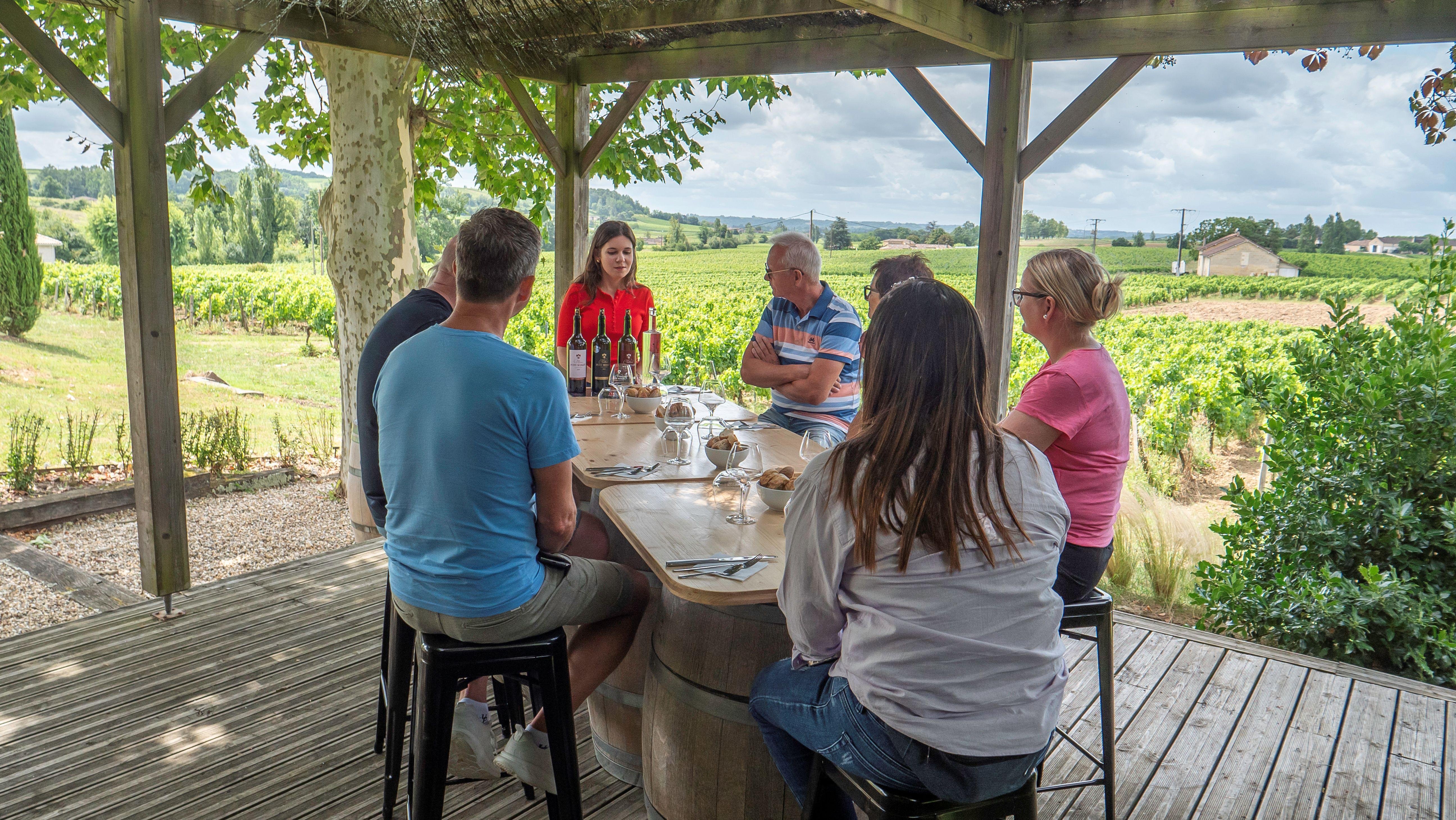
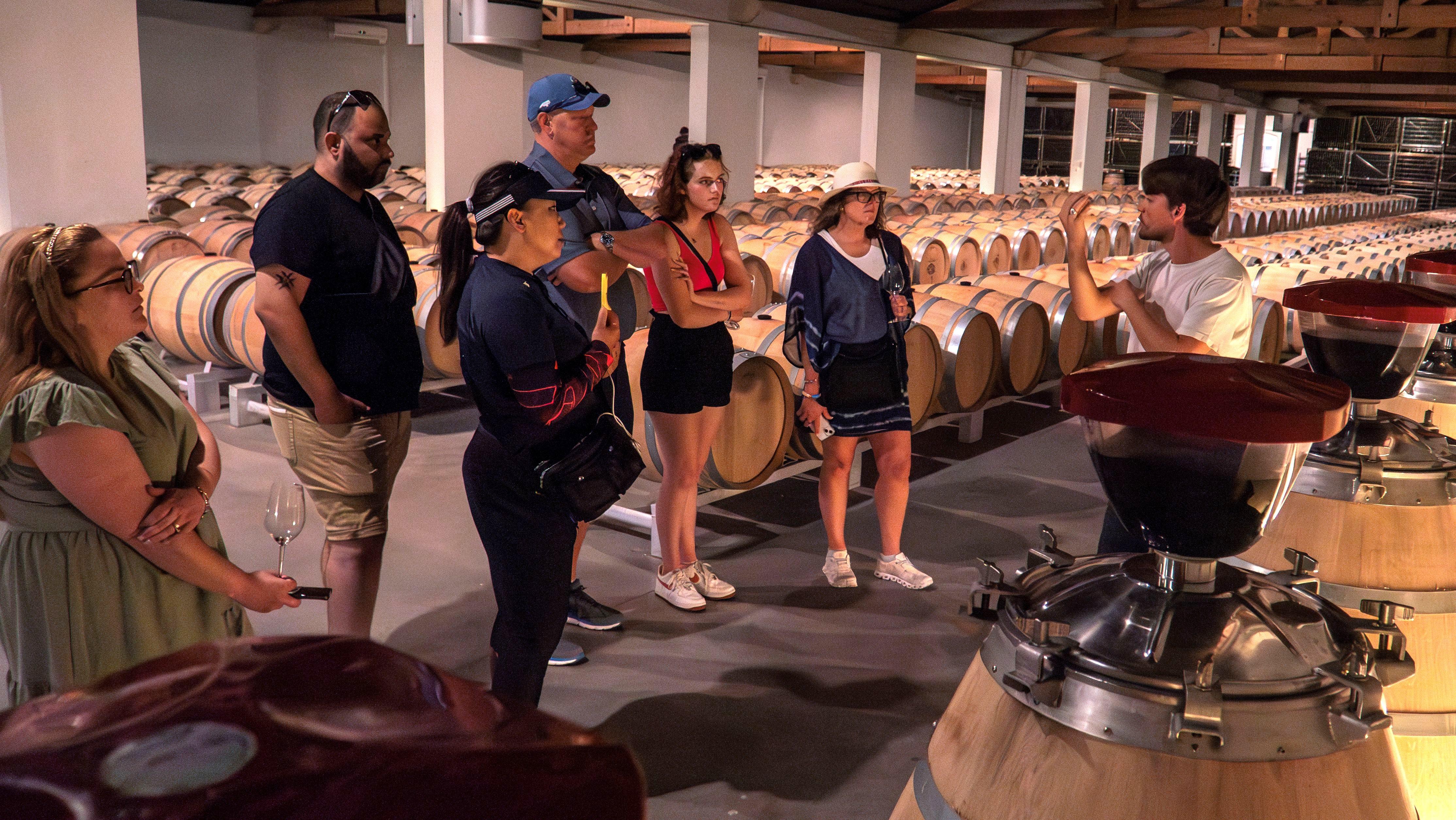
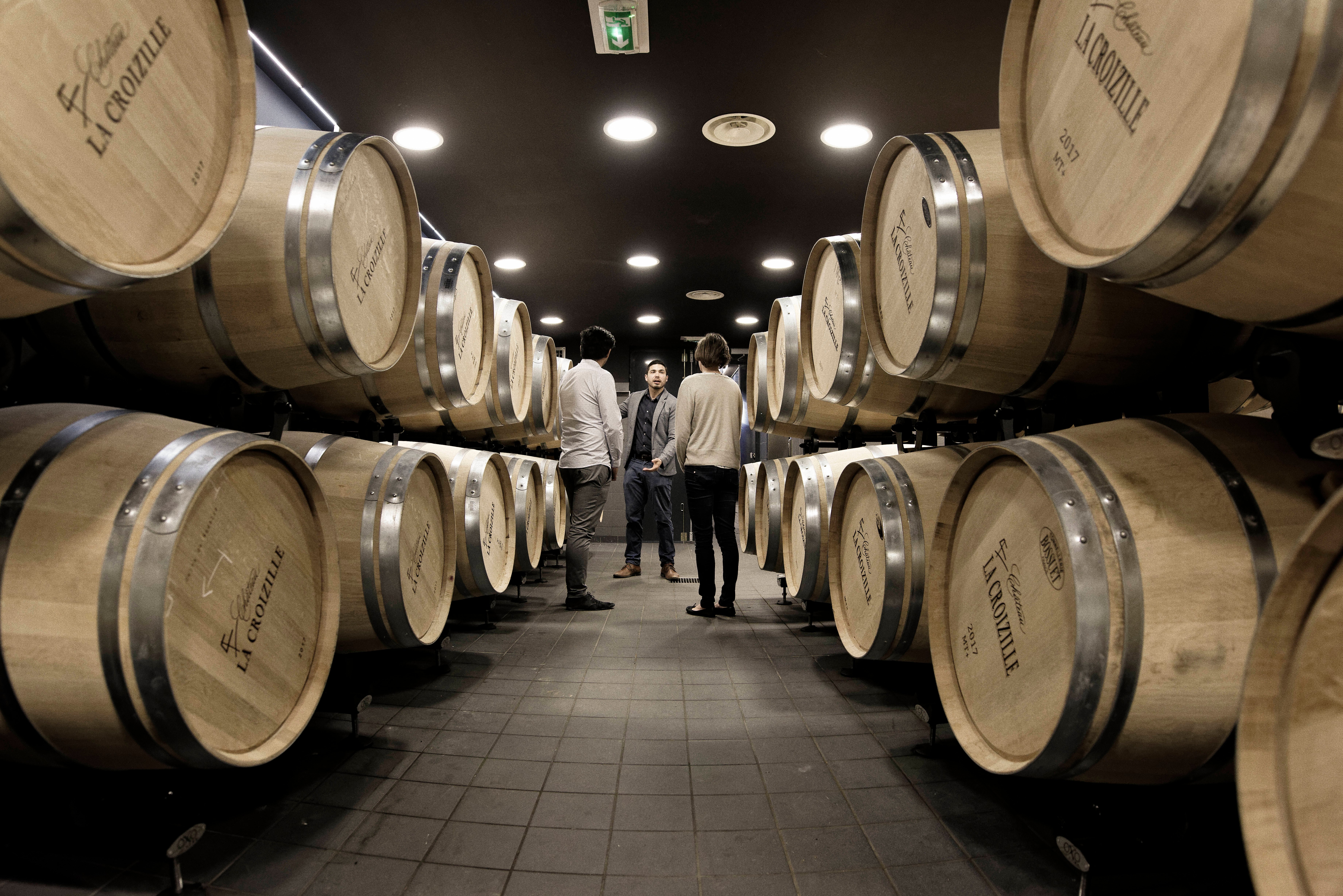
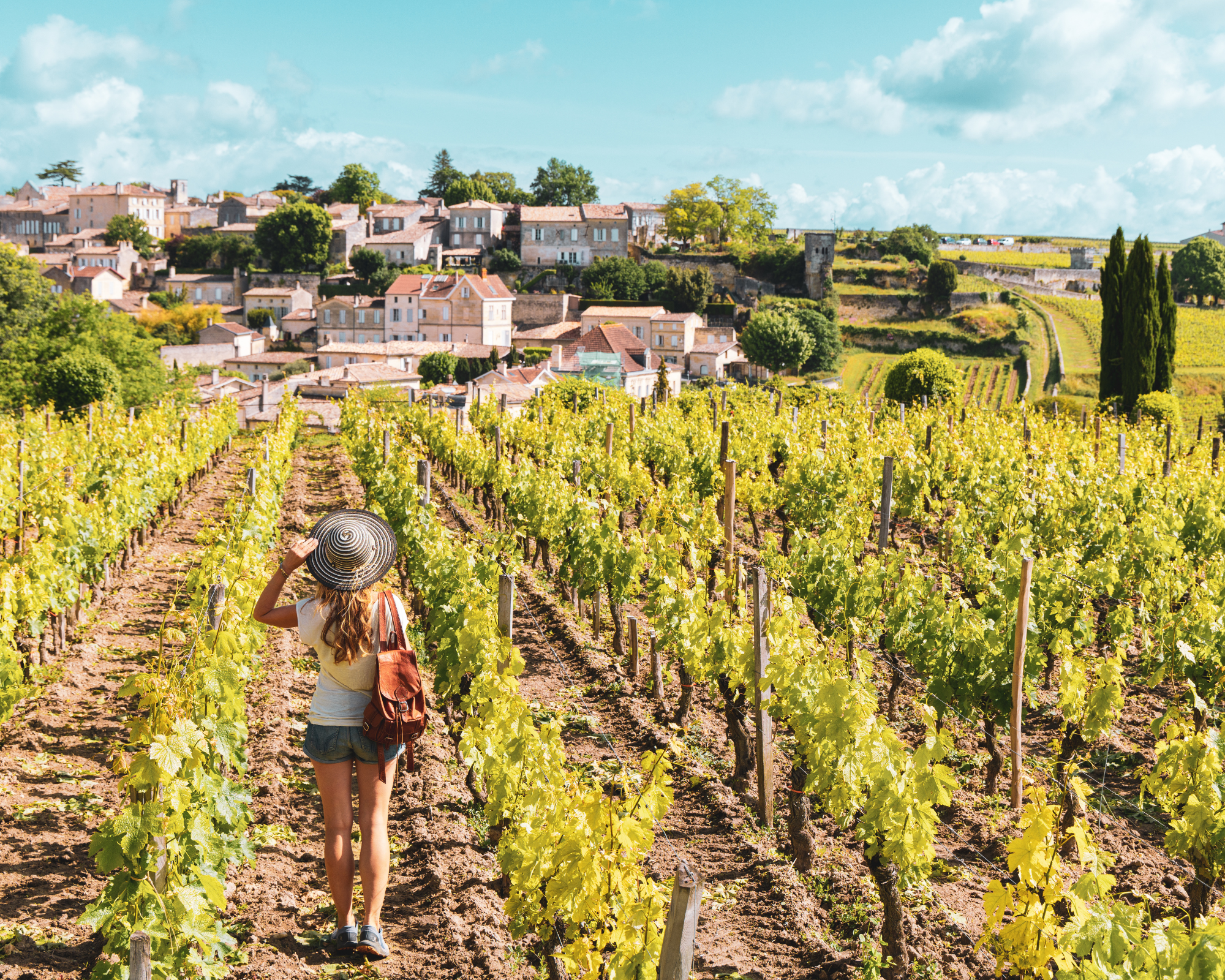
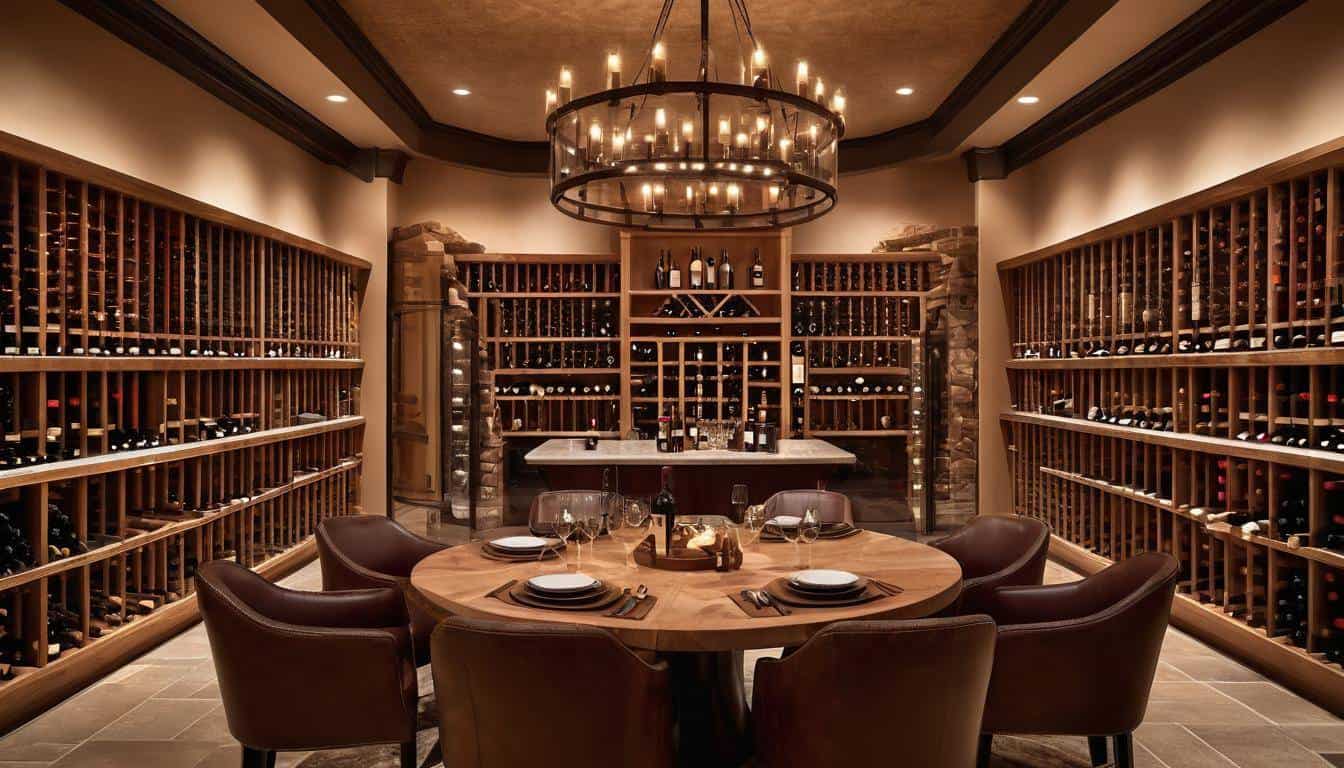
You walk between vine rows, the guide pointing out clay-limestone soil composition and explaining why these slopes produce fruit with higher tannin concentration than valley-floor parcels. The cellar descends two levels into the hillside, temperature holding at 14 degrees year-round, and you pause beside oak barriques stamped with the cooperage's insignia and the vintage year stenciled in white.
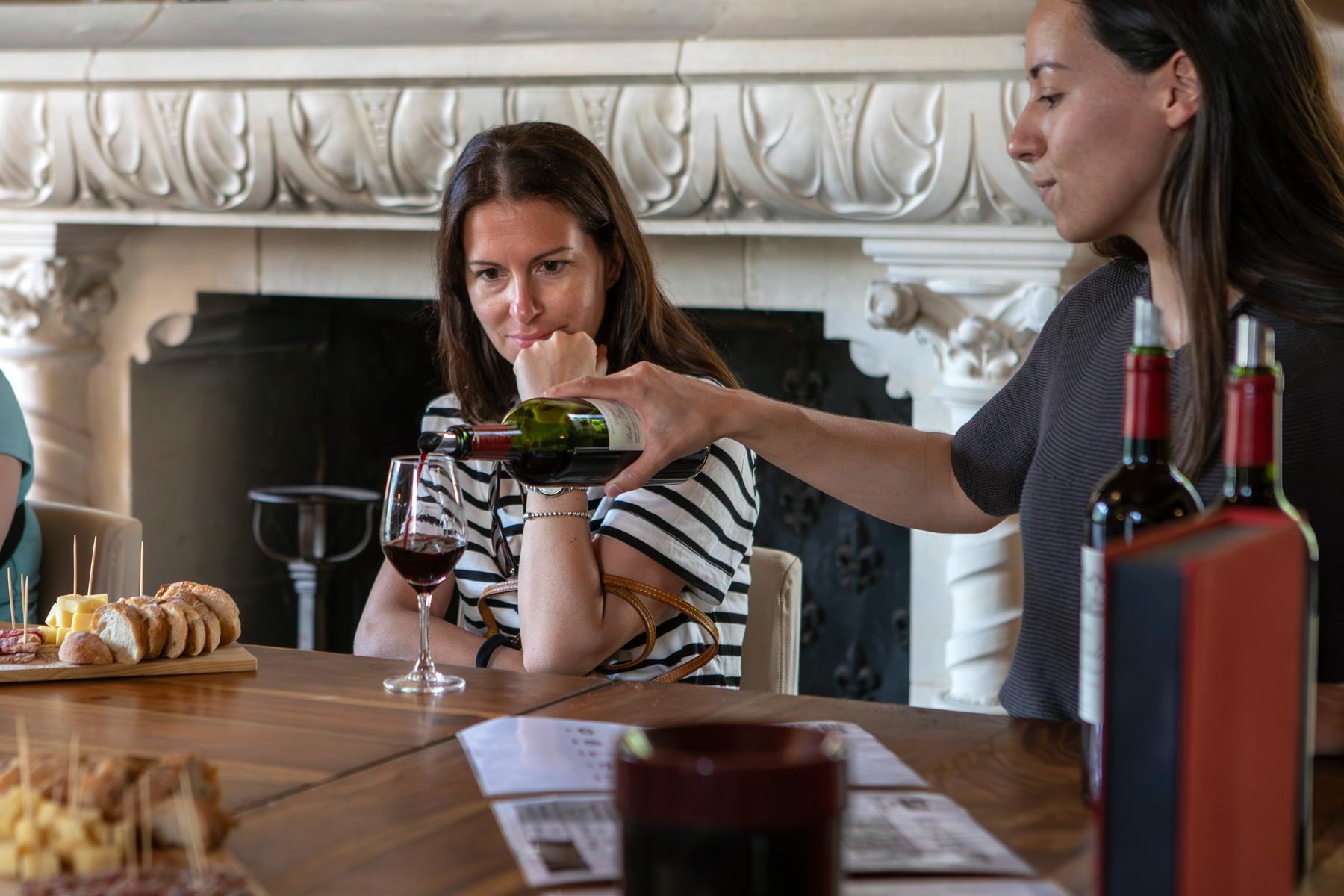
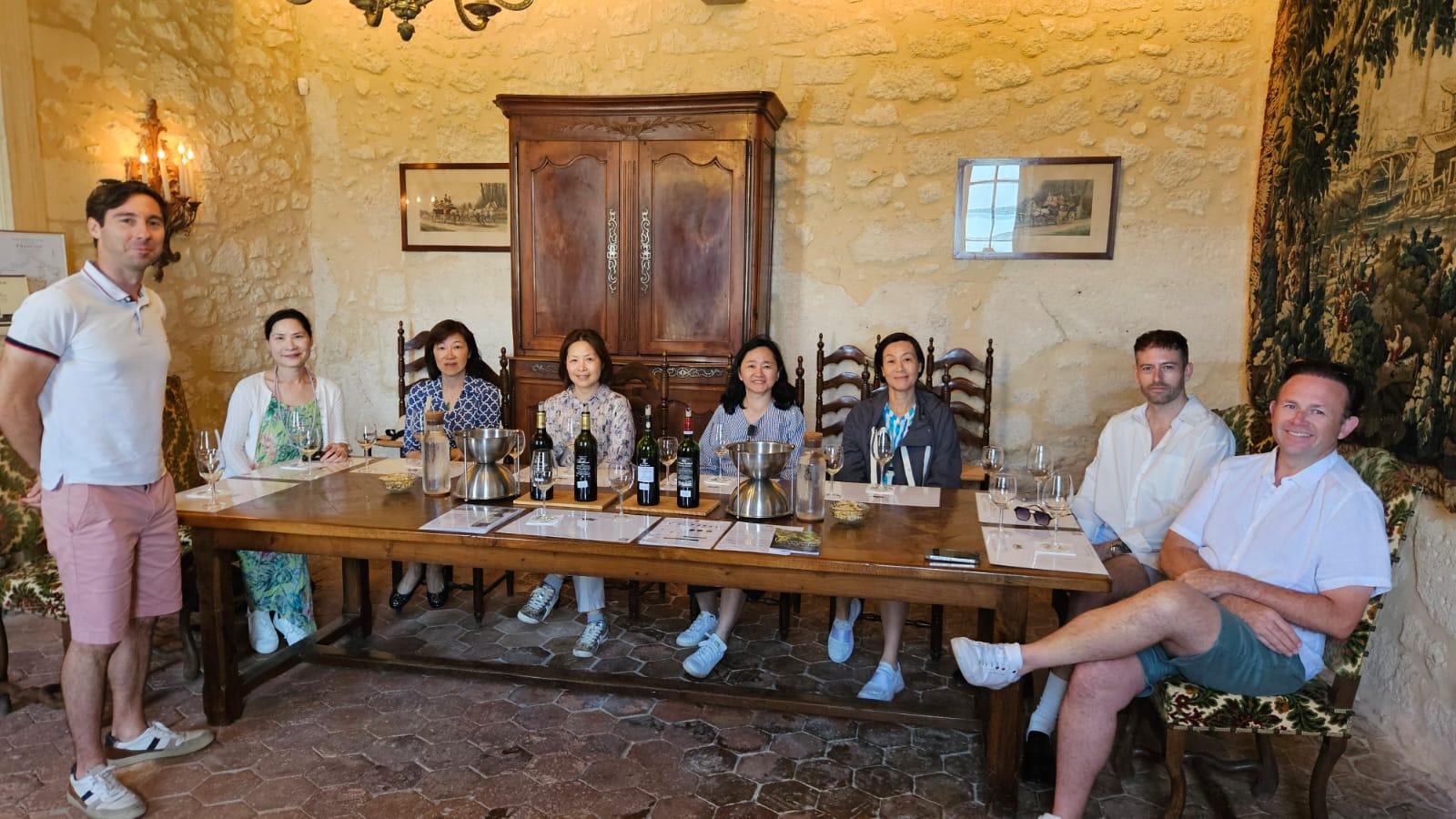
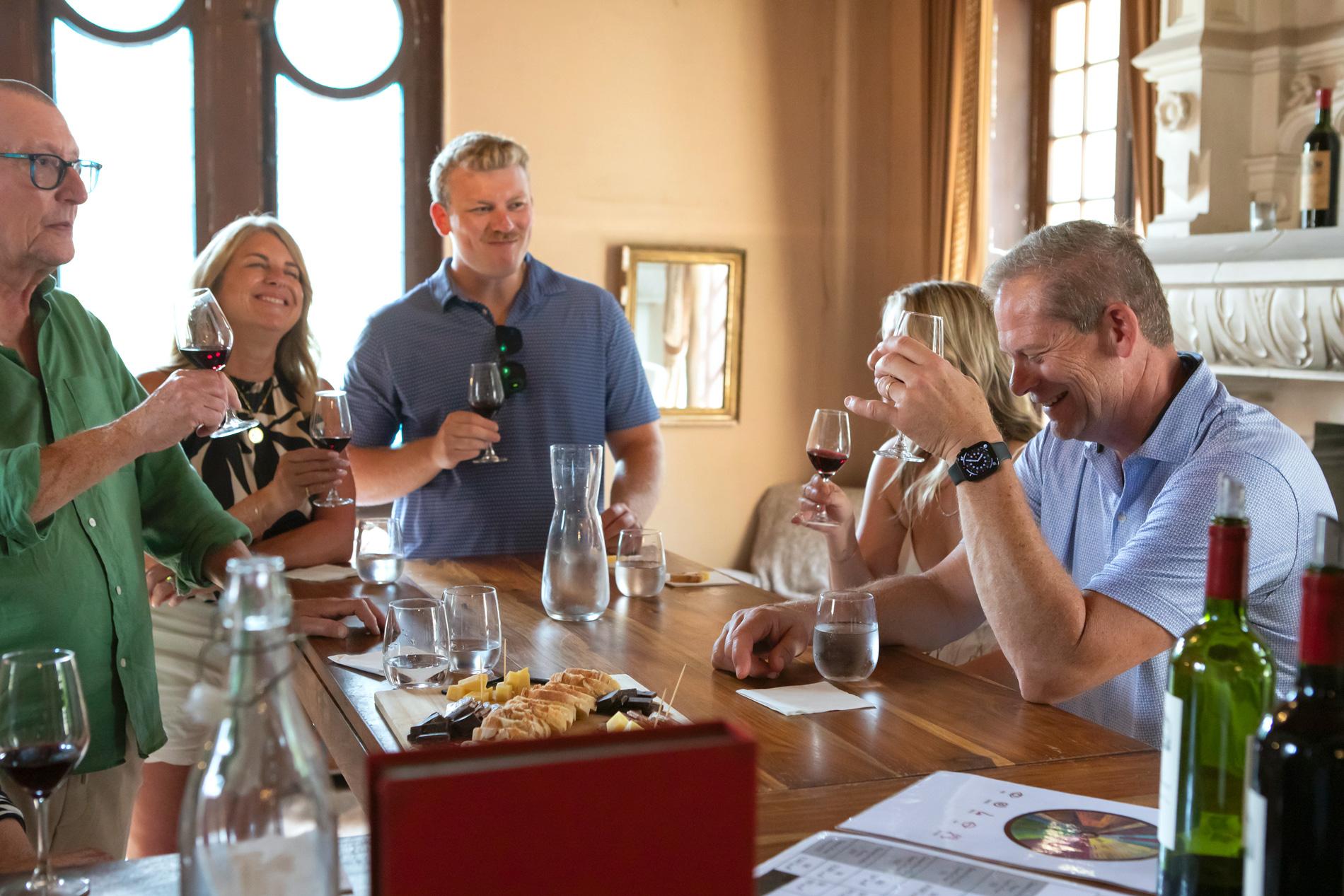
Tasting begins with the estate's second wine — approachable fruit, moderate oak influence — before progressing to the Grand Cru. You swirl, inhale cassis and tobacco leaf, and the guide discusses the 2022 growing season's heat spikes and how barrel selection affects the final blend. A second château visit often follows, this one a Premier Grand Cru Classé where the tasting room overlooks the village's bell tower and the guide pours library vintages alongside current releases. You compare a five-year bottle to a fifteen-year example, noting how tertiary aromas of leather and dried fig emerge with age. The tour concludes in the village, where you have thirty minutes to explore the monolithic church or purchase direct-from-producer bottles before the return departure.
All the details about your upcoming adventure in one place
Saint-Émilion's viticultural authority rests on nine centuries of uninterrupted wine production — the village earned UNESCO World Heritage status in 1999 not for its medieval architecture alone, but for the living landscape of châteaux, limestone cellars, and meticulously tended slopes that define the Right Bank.
The appellation covers 5,400 hectares across eight communes, yet the village itself occupies less than three square kilometers, its Romanesque church and monolithic catacombs carved directly into the plateau calcaire that gives Merlot-dominant blends their signature minerality. The 1955 Saint-Émilion Classification established sixty-four Grands Crus Classés, a tiered system revised every decade — fifteen Premier Grand Cru Classé estates anchor the appellation's reputation, their bottles commanding global auction prices while smaller family domains welcome visitors into vaulted cellars unchanged since the 18th century.
A Bordeaux wine tour St Emilion today operates within this dual identity: pilgrimage site for oenophiles and accessible gateway for first-time vineyard visitors. The appellation's clay-limestone terroir favors Merlot and Cabernet Franc over the Cabernet Sauvignon dominance of the Médoc, yielding wines that balance fruit-forward approachability with age-worthy structure. Château Angélus, Château Pavie, and Château Ausone occupy the steepest south-facing slopes — the côtes — where morning sun and afternoon heat concentration produce the appellation's most concentrated expressions. Guided tastings typically begin with a walk through pruned vines, the guide explaining canopy management and the September harvest window before descending into temperature-stable cellars where French oak barriques rest in rows of four hundred.
The village infrastructure supports over half a million visitors annually without surrendering its functional identity as a working wine commune. Cooperative cellars and négociant warehouses still line the lower terraces, and harvest crews occupy the same stone cottages photographed in 1920s agricultural surveys. The Monday–Tuesday closure observed by the tourist office and underground monuments reflects the industry's rhythm, not arbitrary scheduling — cellar masters use those days for racking and blending trials, and vineyard managers conduct soil sampling without tour groups present. The 11-euro conservation fee funds the preservation of the monolithic church and catacombs, Roman-era quarries that supplied building stone for Bordeaux's 12th-century expansion and now serve as climate-stable aging chambers for select cuvées. Saint-Émilion functions as both museum and active production zone, its cobbled lanes connecting tasting rooms to working fermentation halls where the 2026 vintage will soon begin its transformation from must to classified wine.
The appellation earned UNESCO recognition for the living landscape of châteaux and limestone cellars that define the Right Bank.
Casual and comfortable clothing is recommended for a bordeaux wine tour st emilion. Sturdy walking shoes are essential due to the limestone streets and uneven terrain found in the village.
Large backpacks and bulky luggage are discouraged during a bordeaux wine tour st emilion. Security may inspect bags before allowing entry to underground sites.
Non-commercial photography is generally permitted during a bordeaux wine tour st emilion. Use of tripods or flash is restricted inside the underground monuments to preserve the heritage site.
Families are welcome to explore the village during their bordeaux wine tour st emilion. Parents should be prepared for stairs and cobblestone paths when navigating with children.
Due to the historic nature of the village and the underground layout, some areas may not be fully accessible to visitors with limited mobility. Please contact the tourism office for specific guidance on your bordeaux wine tour st emilion.
Consumption of food and beverages is prohibited inside the underground monuments. Visitors should utilize local cafes and restaurants in the village square after their bordeaux wine tour st emilion.
Opening Hours
Wed–Sun 10:30–12:30, 14:00–17:00
Address
Le Doyenné, Place des Créneaux, 33330 Saint-Émilion, France
Best arrival window
10:30–12:30
Public transport · 45 min · 10-15 EUR
Regional trains run frequently from Bordeaux Saint-Jean to Saint-Émilion station.
Car · 1 hour · Parking fees apply
Follow signs for A89 towards Libourne; parking is available outside the medieval city walls.
Requests for cancellations or modifications must be submitted according to the specific terms of your booking. Refunds for the 11 EUR entrance fee are subject to the operator’s cancellation window.
Recommended time
3-4 hours
To experience a bordeaux wine tour st emilion effectively, allocate time for both the underground monuments and surrounding vineyards. Visitors often secure bordeaux wine tour st emilion tickets early to ensure access to the monolithic church, as guided excursions fill quickly by midday. Those planning bordeaux wine tour st emilion tours should prioritize the morning block to navigate the limestone corridors and vaulted cellars with minimal congestion before afternoon groups arrive.
Crowd levels through the day
Weather · crowds · average price — dots go green to amber to red as each metric rises.
Moderate temperatures and fewer crowds make this ideal for walking tours.
Warm weather with peak tourism; book your bordeaux wine tour st emilion tickets in advance.
Harvest season brings vibrant colors to the surrounding vineyards.
Quieter atmosphere and lower visitor numbers during the off-season.
Secure your bordeaux wine tour st emilion tickets online to guarantee your preferred time slot.
The limestone cobblestones are notoriously difficult for heels or flip-flops.
Use the 10:30–12:30 arrival window to avoid mid-day crowds.
Carry water as the village streets offer limited shade during hot summer afternoons.
Confirm return train times to Bordeaux as the last service may depart early in the evening.
Le Doyenné, Place des Créneaux
Primary hub for all scheduled tours.
Get directionsSaint-Émilion's origins trace to the eighth century, when a Breton monk named Émilion settled in a natural cave carved into the limestone plateau above the Dordogne valley. By 750 CE, the hermit's reputation for miracles drew pilgrims, and a monastic community formed around his grotto. The Benedictines who succeeded him excavated the monolithic church directly from bedrock between the ninth and twelfth centuries, creating the largest underground sanctuary in Europe. Workers removed an estimated 15,000 cubic meters of limestone, shaping columns, vaults, and a nave that could shelter hundreds. The church consecration occurred in 1152, the same year Eleanor of Aquitaine's marriage to Henry Plantagenet linked Bordeaux to the English crown. English control from 1152 to 1453 transformed the region's economy. Plantagenet demand for claret fueled vineyard expansion across the jurisdiction's limestone and clay slopes, and Saint-Émilion wines gained privileged access to London markets. The Jurade, a municipal council established in 1199 by King John, regulated harvest dates and quality standards, stamping approved barrels with the commune's seal. This governance survived the Hundred Years' War and the return of French sovereignty in 1453. Phylloxera devastated the vineyards between 1875 and 1892, destroying nearly 80 percent of the rootstock. Grafting onto American vines salvaged the appellation, though replanting shifted varietal proportions toward Merlot on the right bank's cooler soils. The 1955 Saint-Émilion classification formalized the hierarchy of châteaux, establishing Premier Grand Cru Classé A and B tiers that are revised every decade. UNESCO inscribed the jurisdiction as a World Heritage Site in 1999, recognizing the cultural landscape of historic vineyards, medieval architecture, and the monolithic church. Guided bordeaux wine tour st emilion tours now combine cellar visits with access to the underground monuments managed from Place des Créneaux. The limestone galleries that stored barrels for centuries remain central to the narrative of bordeaux wine tour st emilion tickets, linking viticulture to the carved bedrock that defines the appellation's identity.
Breton monk Émilion establishes a hermitage in a limestone cave above the Dordogne valley.
Benedictine monks excavate the monolithic church from bedrock, removing 15,000 cubic meters of stone.
Church consecration coincides with Eleanor of Aquitaine's marriage, linking Bordeaux to English Plantagenet rule.
King John establishes the Jurade to regulate wine quality and harvest standards in Saint-Émilion.
Phylloxera destroys 80 percent of vineyards; American rootstock grafting enables replanting with Merlot dominance.
Saint-Émilion classification formalizes Premier Grand Cru Classé tiers, revised every decade.
UNESCO inscribes Saint-Émilion as a World Heritage Site for its viticultural landscape and monolithic church.
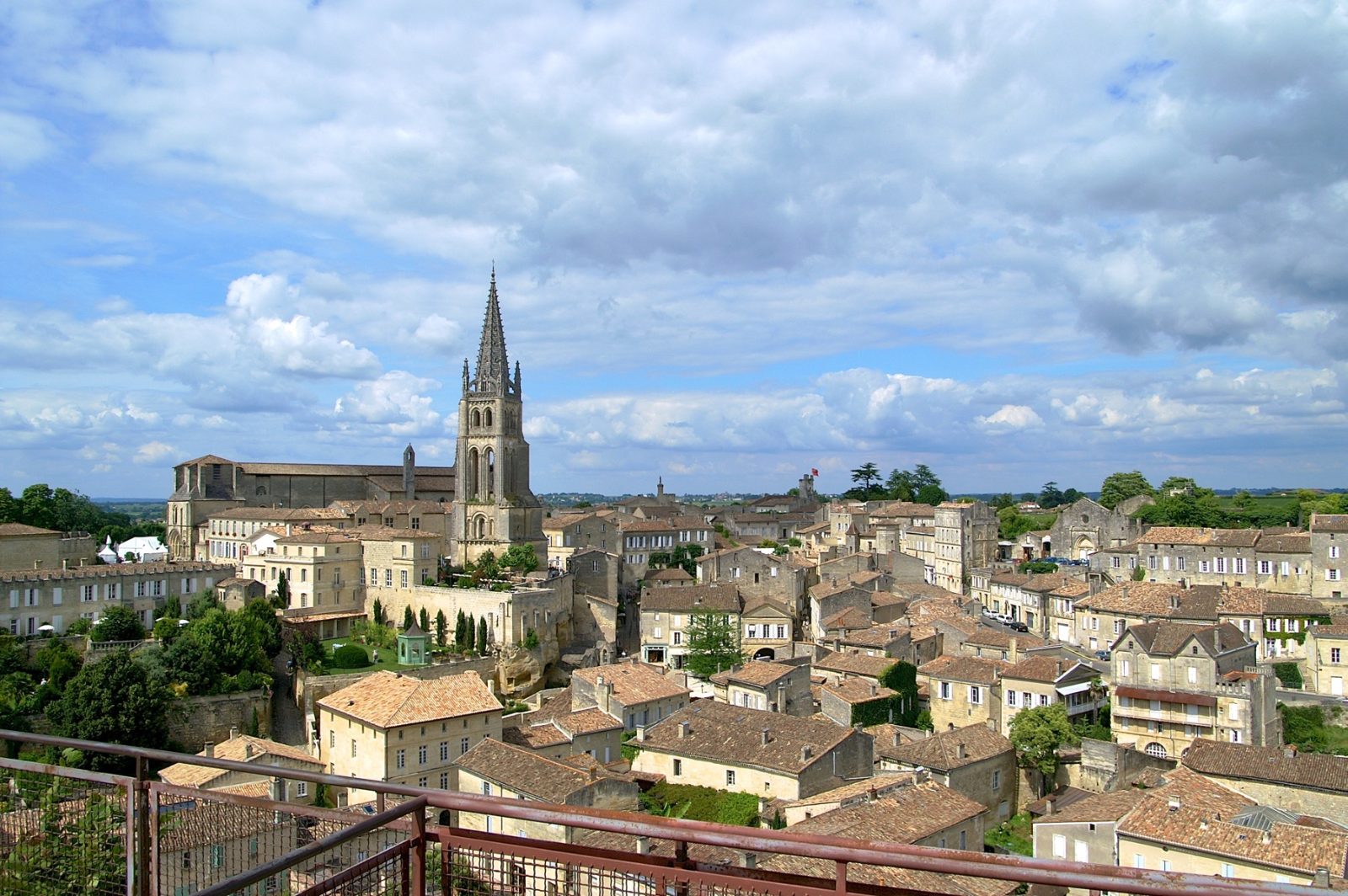
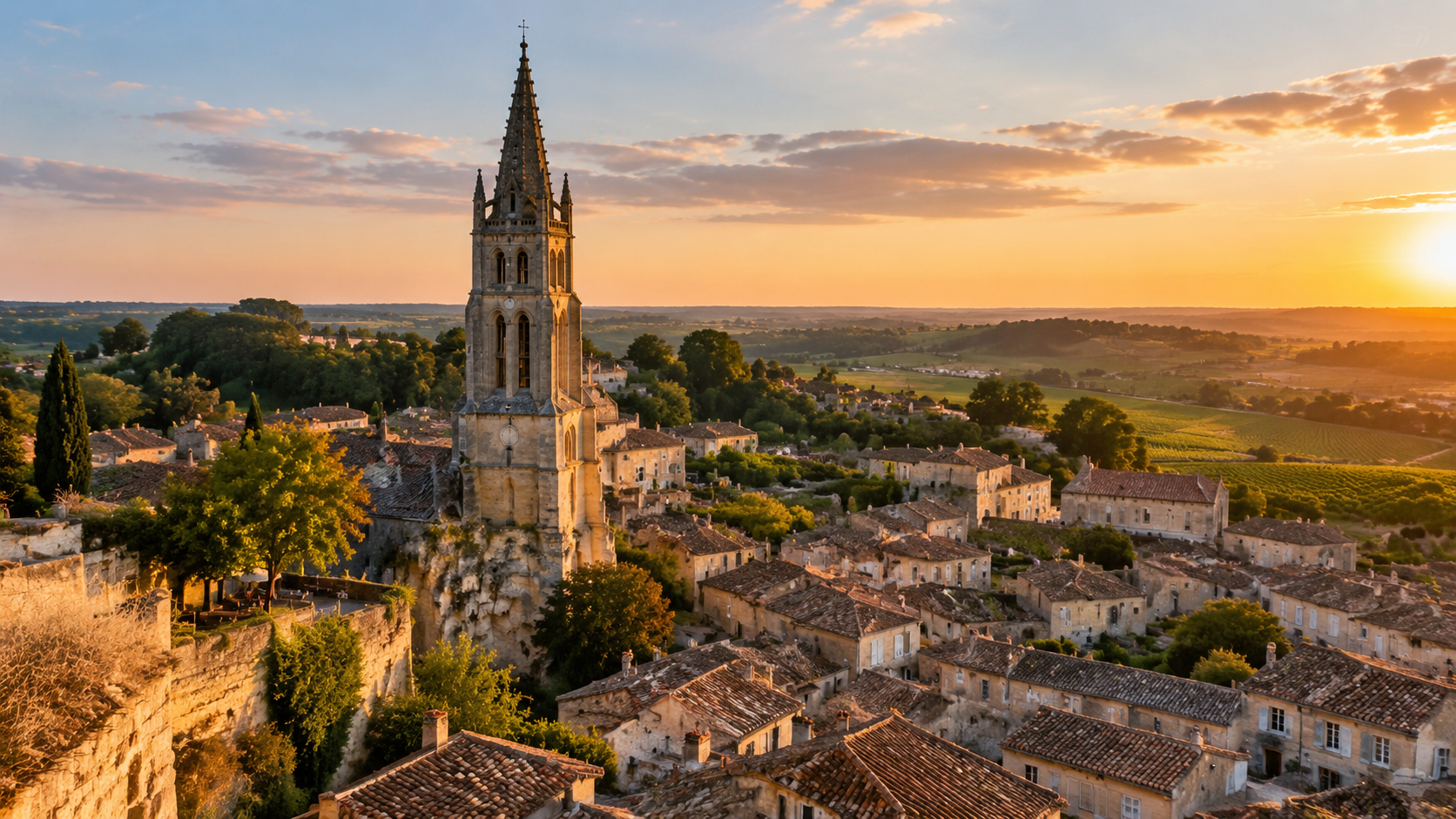
Climb the medieval keep to capture a high-angle perspective of the terracotta rooftops and village alleyways below. Access involves a narrow staircase leading to the battlements where the village stone texture contrasts with the green valley.
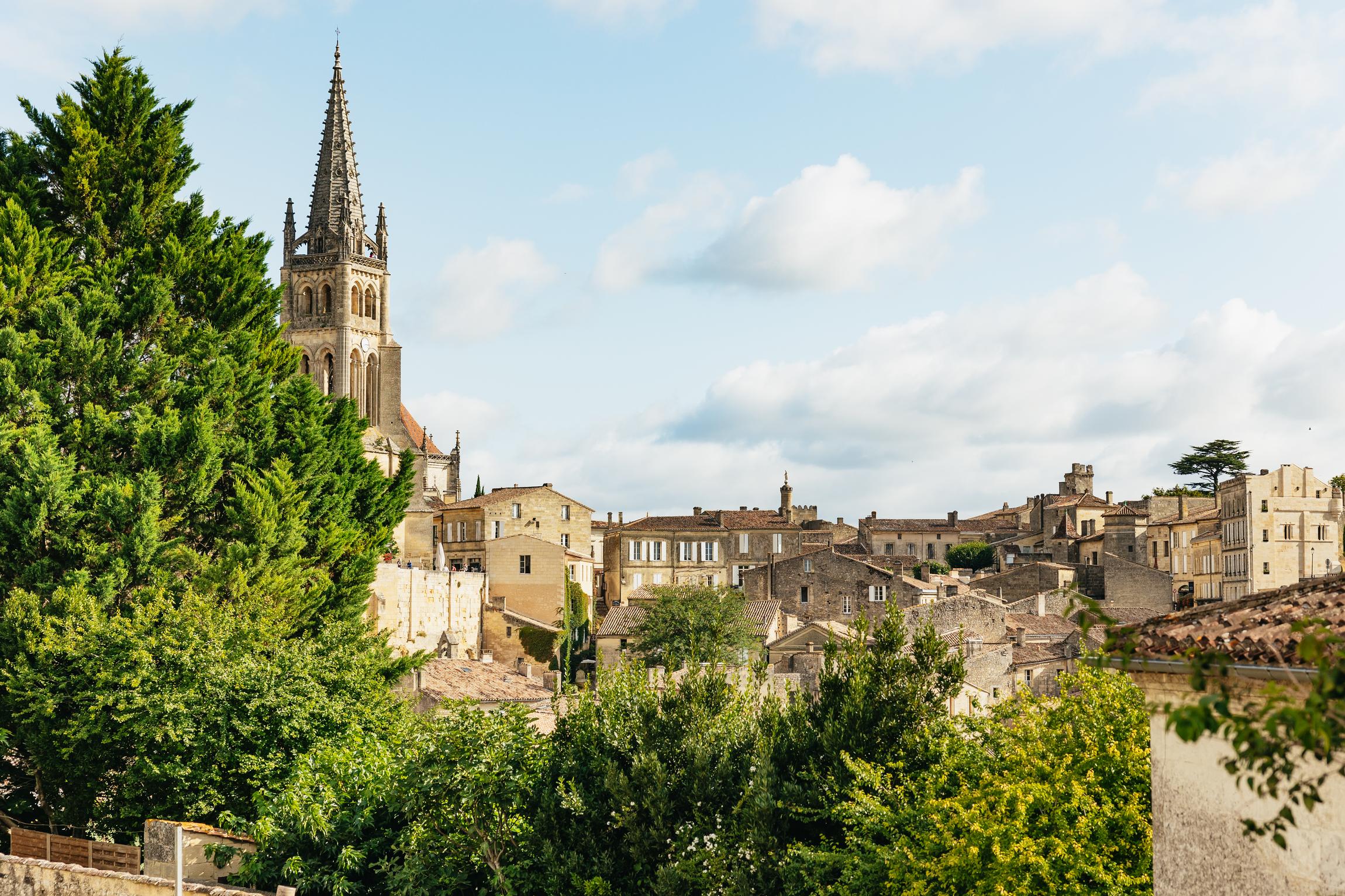
From this elevated vantage point, you secure the iconic shot of the bordeaux wine tour st emilion skyline including the surrounding limestone landscape. This location provides the most recognizable composition for those seeking to document the UNESCO heritage architecture.
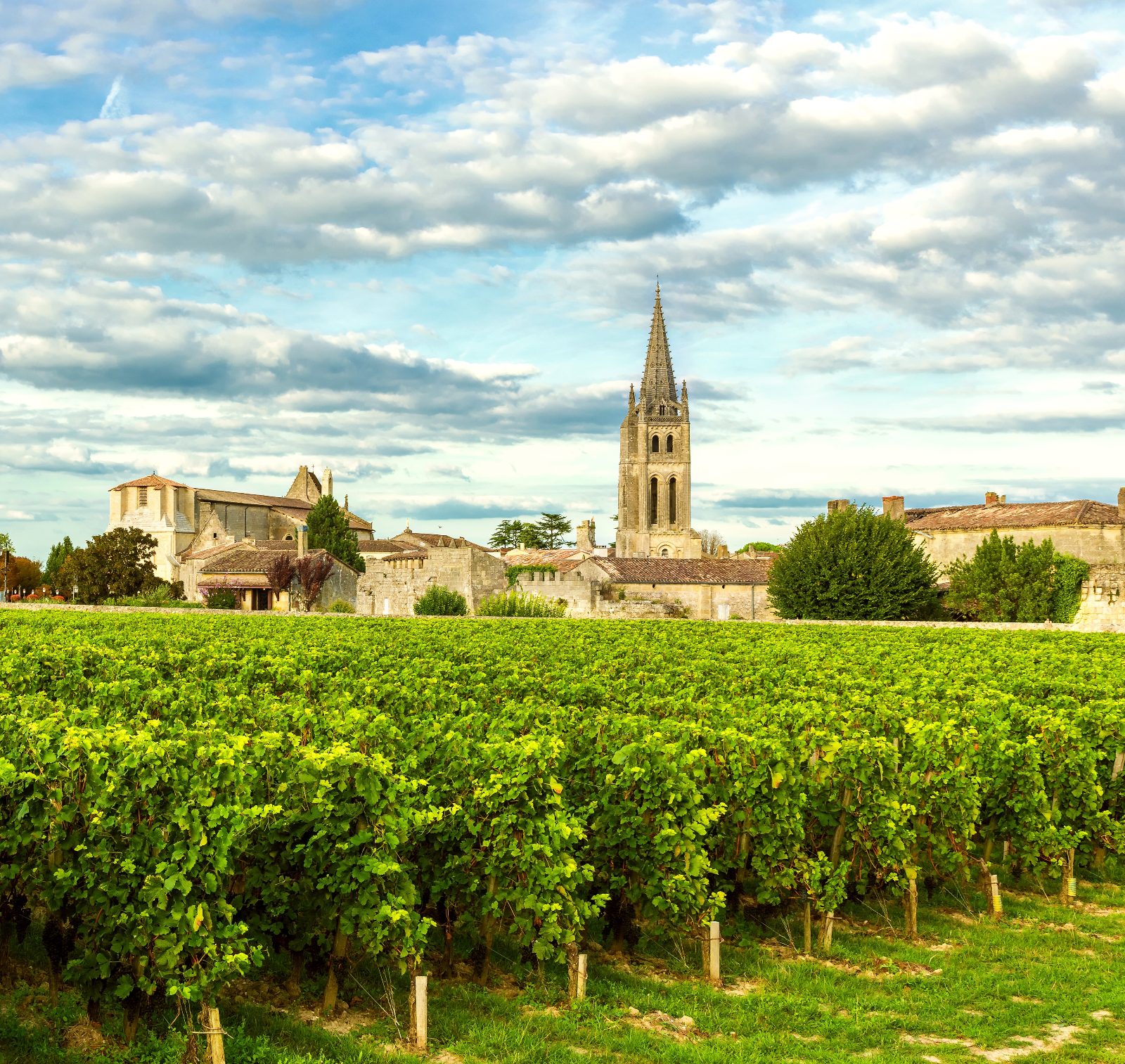
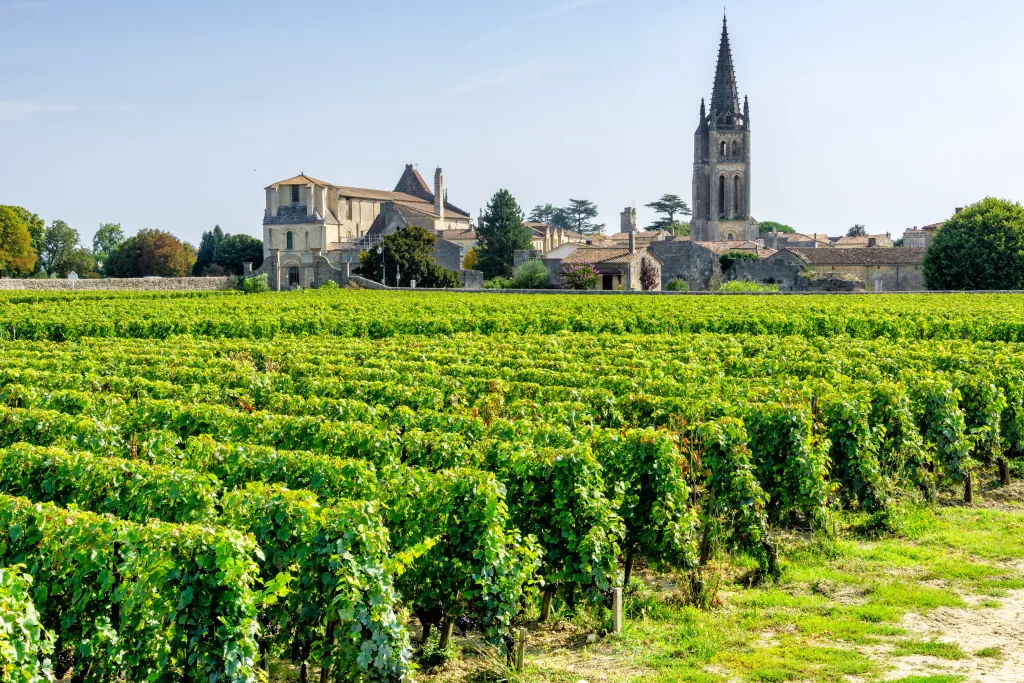
Position yourself near the upper village perimeter to frame the rolling slopes of local vineyards against the ancient town walls. This viewpoint offers a depth of field that highlights the transition from urban stone to the famous viticultural terroir.
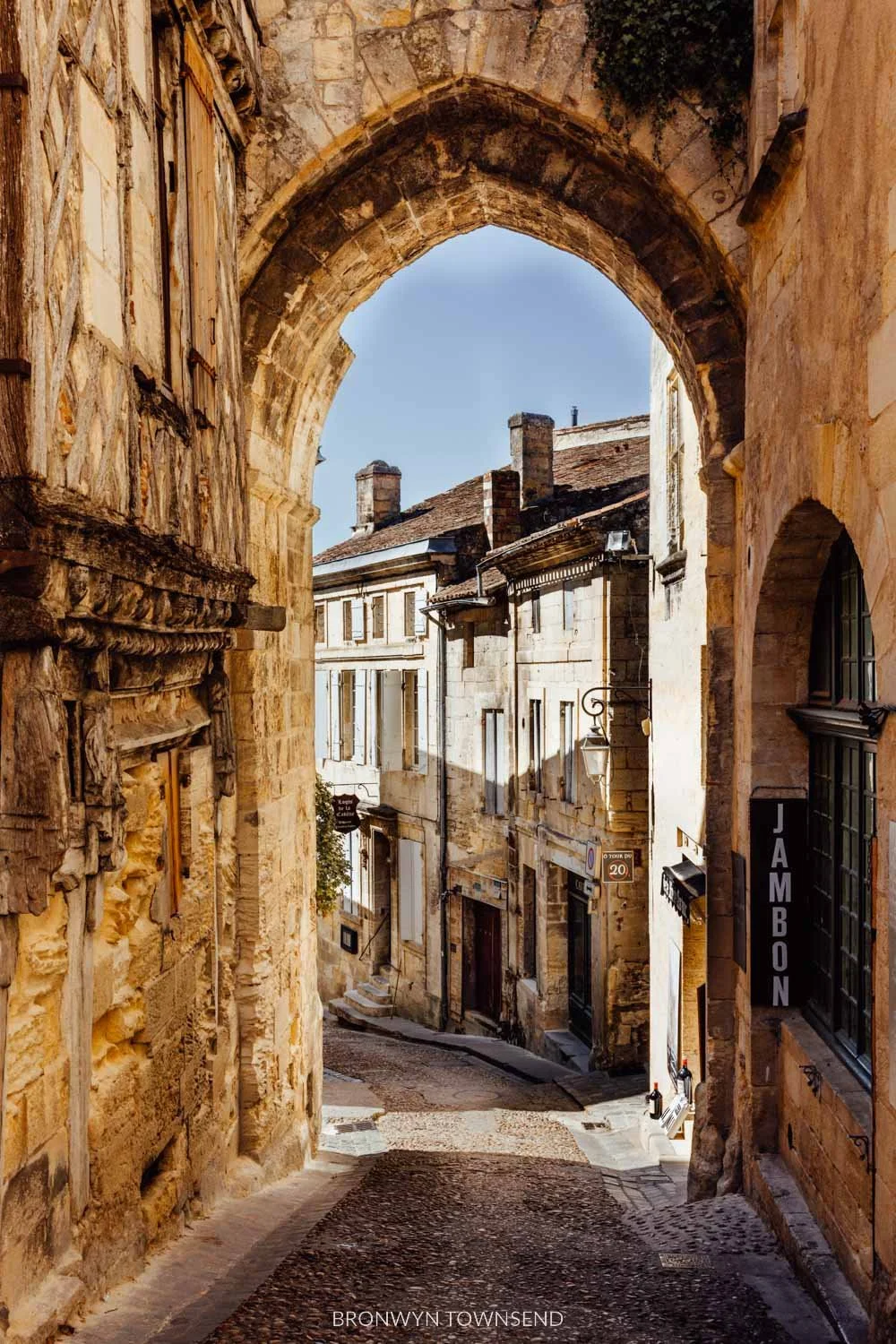
This narrow thoroughfare offers a classic portrait of the village architecture with the bell tower framed by historic dwellings. Stand mid-way down the slope to ensure the vertical lines of the limestone facades remain balanced in your bordeaux wine tour st emilion tours frame.
Exploring a bordeaux wine tour st emilion is a memorable experience that brings medieval history and vineyard landscapes to life for all ages. While the village streets are steep and cobblestoned, the underground wonders often captivate younger visitors with their mysterious, cool atmosphere.
The village features steep, narrow streets and uneven cobblestones that can be challenging with a stroller; a sturdy carrier is often more practical for navigating these historic paths. The underground monument site has specific access limitations, so please contact the tourist office at +33 5 57 55 28 28 to confirm current conditions for your needs.
The guided bordeaux wine tour st emilion tickets provide access to four unique subterranean sites, including the monolithic church and catacombs. These guided walks last approximately 45 minutes to 1 hour and are an excellent way to keep children engaged with local legends and history.
We suggest using the best arrival window of 10:30–12:30 to avoid mid-day crowds and secure your spot for the underground monuments. Parking is available at the edge of the village, so allow extra time to walk to the meeting point at Le Doyenné, Place des Créneaux, 33330 Saint-Émilion, France.
Entrance fee is 11 EUR (Admission fee for the underground monuments, per person). Ensure you have your details ready, as these bordeaux wine tour st emilion tours are popular and require an official guide for entry to the subterranean areas.
Many local châteaux offer outdoor spaces and educational activities; look for estates that provide grape juice for younger guests alongside adult tastings. Private sessions can be a helpful way to ensure a more relaxed atmosphere for your family when booking your bordeaux wine tour st emilion tour.
Exploring the medieval village near a bordeaux wine tour st emilion requires refueling at local bistros that showcase regional terroir. While the underground monuments at Le Doyenné do not host dining, the surrounding cobblestone streets offer traditional cafes perfect for pairing local vintages with seasonal fare.
A classic institution for those finishing their bordeaux wine tour st emilion tours, offering an extensive selection of local estate wines and refined small plates. Reservations are recommended during peak lunch hours to secure a spot on the terrace.
Located on one of the steepest lanes, this eatery provides a sophisticated menu focusing on fresh, regional ingredients. It is an ideal stop for a sit-down meal between bordeaux wine tour st emilion tickets or vineyard visits.
For a premium experience, this historic restaurant serves gourmet cuisine that pairs perfectly with high-end Saint-Émilion grand crus. It is a preferred choice for visitors seeking a culinary highlight following their bordeaux wine tour st emilion tour.
Everything you need to know for your journey
The monuments are open Wednesday through Sunday from 10:30–12:30 and 14:00–17:00. Please note the site is closed on Mondays and Tuesdays.
Yes, booking in advance is recommended for any bordeaux wine tour st emilion tour to ensure availability.
Non-commercial photography is permitted, though tripods are restricted. Please avoid using flash in the underground monuments.
The address for the tour meeting point is Le Doyenné, Place des Créneaux, 33330 Saint-Émilion, France.
Large bags are discouraged as storage space is limited at the meeting point.
While there is no formal dress code, comfortable walking shoes are essential for exploring the historic village.
Yes, families are welcome on a bordeaux wine tour st emilion; however, note that the terrain involves stairs and steep paths.
Refund policies for the 11 EUR entrance fee vary by operator, so please review your booking confirmation for specific details.
Yes, many cafes and restaurants surround the village square, though food is prohibited inside the underground monuments.
The largest rock-cut church in Europe located at the heart of the village.
A 13th-century keep offering panoramic views of the surrounding vineyard landscapes.
Historical ruins featuring beautiful gardens and a traditional wine shop.
The central square surrounded by historic limestone buildings and cafes.
Upscale historic hotel overlooking the vineyard hillsides.
Charming establishment located within the medieval walls.
Multiple guesthouses and apartment rentals available near the village core.
Join thousands of happy travelers who have discovered this incredible experience
Book Your Experience Now